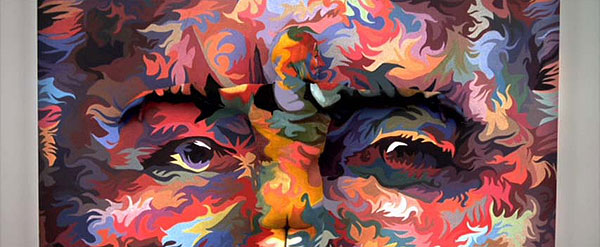
He easily ignored
the stares,
the crude comments,
the threatening gestures,
engendered
by his street-corner ministry:
his testament of Faith.
He overcame his fear
with his Belief
that, even in these squalid
ghetto streets,
the Word
should enlighten.
While he sang
“What a Friend we have
in Jesus,”
a hulk in gangsta garb
spat on him,
and he worried that
his Testimony
only made
his God
sad.
The crisp, orange daylight fades
into crystalline evening.
The stars, just out of reach,
twinkle in ballroom splendour:
Morse messages long forgotten.
The chill northern breeze whispers
rude suggestions to graceful maples.
Their blushes, still visible
in October’s early light,
soon thaw the frosted lawn.
Chimneys draw straight lines
over cool suburban streets:
auras redolent of porridge
and the warmth of brown toast:
fortifying strength for another autumn day.
I must admit that I was surprised, and yes, even a little dismayed, when I first realised that cultural appropriation was a thing. I always thought of humans as a species, evolving towards something greater and better than we are today. In my shallow little so-called “whitecentric” mind, we shared with, and shared from, other cultures.
Hence, in summer, I still like to wear my sarong on the verandah.
I started out with reggae, but expanded my appropriation to include a whole gamut of “world” music.
I eat sushi, goulash, pizza, enchiladas, steak/egg/chips, Thai, Chinese (including regional foods), and on and on.
The Hindu concept of Brahman has become a part of who I am, but I admire some of Gautama’s teachings, as well as those from K’ung-fu-tzu.
I wear clothes of (mostly) Italian design.
If I had hair, I would have worn dreads at some time of my life.
I love the inukshuk, but haven’t constructed one because I know I could not do it justice.
I have been trying to shed the skin of religious conditioning that my childhood, country, and culture, has lathered on me over the years.
My childhood was close to being destitute, but wasn’t quite, but I didn’t look at the kids from Nob Hill and want what they had (unless, in the late 50s, it was the white bucks that all the cool rich kids had).
I used to play cowboys and indians as a child and would play either role without feeling that I was subtracting anything from a cowboy’s life, or from the valour of a First Nations Warrior.
And I am now in a position where I feel that I have to apologise to all of the cultures of the world for admiring, and emulating, much of their ways of life, thinking, eating. It was never my intention to piss off an entire culture! It was never my intention to denigrate through my adoption of whatever from their culture.
I simply thought, naively it now seems, that we were all one species and, if I had something good, tasty, or cool, that anyone wanted to duplicate for their own purposes, hey! that is what a species does.
No slight. No bigotry. No taking advantage of various cultures.
My ancestors were Irish, preceded by Norman. We immigrated to British Nova Scotia in the mid to late 1700s, and (I suspect) had to pretend to be Protestant to get jobs. As economic refugees, my family moved to Timmins in the 1940s to better our lives.
Things change: people adapt.
If you see me eating ethnic food, wearing ethnic clothes, singing ethnic music, I am not mocking you, or trying to take anything away from the culture that produced you. I am simply saying, “Hey, fellow traveller! I really enjoy your food/clothes/music/thought/whatever, and I think it worthy of emulation.”
So if all of the above makes me a bad person, a cultural stalker, please tell me what alternative I have, other than living alone, in a closet.
Sometimes I get puzzled by shit: this is one of those times.
He was an old man who had reached a plateau
of peace, and of contentment,
both on the personal
and spiritual level.
He had, in his youth, travelled far and frequently,
observing diverse and different
social mores and customs.
He sought the arcane, and thrived on the esoteric,
seeking both through books and conversations
with sages and scholars,
soldiers and fools.
He learned from youthful mistakes,
incorporating the lessons into his life.
He believed in teaching his children through example,
through logical conclusion and experience,
discounting fairy tales and folk myths,
popular culture and politics,
as simply interesting stories,
and deviations from
the Quest for Truth.
He explored his inner solitudes,
and contemplated the unknown vastness,
the unknowable mysteries
of Being:
of how There goes on forever,
and how it is that Now
is eternal.
He understood the concept
of probability,
of multiple realities,
and how quantum theory
opened doors of thought
that should change human condition.
He held the magic,
this old man,
that could lift our tragic lives
to a level of contentment
and understanding
unimagined.
He held the wisdom
to save untold suffering
and hardship,
to dispel superstition
and prejudice:
the keys to a new Renaissance of Man.
He spoke, and those listening
heard not the wisdom nor the magic,
but saw an old man with weakened voice
and tired eyes,
and laughed at his words,
calling him silly and feeble.
So the world went its way
of pain,
and of stumbling
towards the unknown,
blind and unprepared,
while the old man
meditated,
and thought,
and was content
forever.
In this Reality
it was a foggy day,
with misty droplets
shimmering...
luminous in the morning air.
My beagle pondered
entanglement theory
as we listened,
enchanted,
to the infinite
names of Truth
sighing through the pines.
Other Realities pulsed,
just
beyond
sight:
an ambulance screams
across a cove so tranquil
that the sole loon is embarrassed
by his laugh.
...and a small blue-green bubble
floated,
invisible,
through a cosmos too vast
to be called
god.
I once thought with musing mind,
What if one should suddenly find
(I chuckle when I think of it!)
Oneself a snake, in a mongoose pit?
And would it not make people think,
And rave, and make a frightful stink,
Taking stock of their senses while they squirm,
If transformed into a worm?
Perhaps they’d not be so bigot
If changed into an ocelot.
Would they retain their hate and greed
As a patch of motley, brown seaweed?
If rocks and trees and dogs,
And elephants and hogs,
And even a fallen leaf,
Complain not of their grief,
Then why should mortal man, as such,
Make of so little, so damned much?
As a teenager the concept
of limitless space
amazed me. To think
that, if I pointed skyward,
an invisible line
extended from my finger
would never end!
Skipping stones across
some quiet cove
I would imagine that,
with enough power
behind the throw,
skip distance would eventually
diminish to infinity.
As, through the cycle of our years,
infinity grows much closer,
our spirits weave
a glowing thread
that reaches
to forever.
Just a lonely point on a rocky shore
where I can hear the ocean’s roar;
just a little grove of small jack-pines,
and a humble home that I’d call mine,
on a leeward shore.
A garden green where children play;
with kin and neighbours just down the way,
and a lovely country girl, my wife,
we would lead a happy life
on a leeward shore.
Just a quiet room where I could brood,
and watch the reach’s changing mood.
With a few friends living down the beach,
contentment could be within my reach
on a leeward shore.
***
But I must roam the globe around:
I’m not content with what I’ve found.
There are countries that I’ve yet to see,
with blue lagoon and tall palm tree.
There are dark-eyed faces and tropic nights;
Norwegian fjords and northern lights;
Italian hills and Spanish plains;
Arctic blizzards and Brazilian rains;
and a strong west wind to fill my sail,
and when I’m gone I’ll leave no trail
but a home on the leeward shore.
Chimeric wisps
of anger
filter through
the fog of being.
Chance encounters,
choreographed
by Chaos,
put spark
to tinder-dry emotions
shaped by paranoia’s
hopelessness.
The sudden, explosive,
culmination
of a wasted life,
irrevocably,
irretrievably,
changes the lives of Innocents.
His mind was fresh, his ideals high:
he entered the crowd without knowing why.
He was struck by the panic, the need, and the fear:
the searching and craving, the refusing to hear.
He spoke out in anger, which melted to tears
as he cried in frustration, and aged many years.
So he merged with the mob in its frantic race,
as his conscience screamed with remorse and disgrace.
They laughed, and they pointed, and said he was mad:
and they pulled him still lower: he thought he was glad.
And they spoke without listening:
and they saw, yet were blind:
they cried, false tears glistening:
they sought ne’er to find.
Then he crawled from the gutter, and pulled himself out.
He doubted his senses, wildly glancing about,
for the crowd had gone, seeking darker ways.
He stood in the sunlight, beyond murky haze.
His mind was a void: his morals were corrupt.
He had nowhere to go, nowhere but up.
Welcome, and Namaste
Greetings fellow travellers,
For you American friends visiting, you will notice that this old Canadian uses Canadian English in this blog: kindly bear with me. As I blog primarily on subjects that are vitally interesting to me, I appreciate all feedback.
As I tend to be a bit of a language usage freak, I will, as required, edit obscenity and rude comments. That said, I welcome your opinions and discussion.
May your Dharma be clear
Peace
"If we shadows have offended,
Think but this, and all is mended:
That you have but slumb'red here,
While these visions did appear."
Puck’s epilogue to A Midsummer Night’s Dream